
Modified Bitumen vs. Single-Ply Membranes for Commercial Flat Roofs: A Comprehensive Comparison
Modified Bitumen vs. Single-Ply Membranes for Commercial Flat Roofs sets the stage for this enthralling narrative, offering readers a glimpse into a story that is rich in detail with casual formal language style and brimming with originality from the outset.
In this comparison, we will delve into the composition, durability, cost implications, energy efficiency, and insulation properties of modified bitumen and single-ply membranes to help you make an informed decision for your commercial flat roof needs.
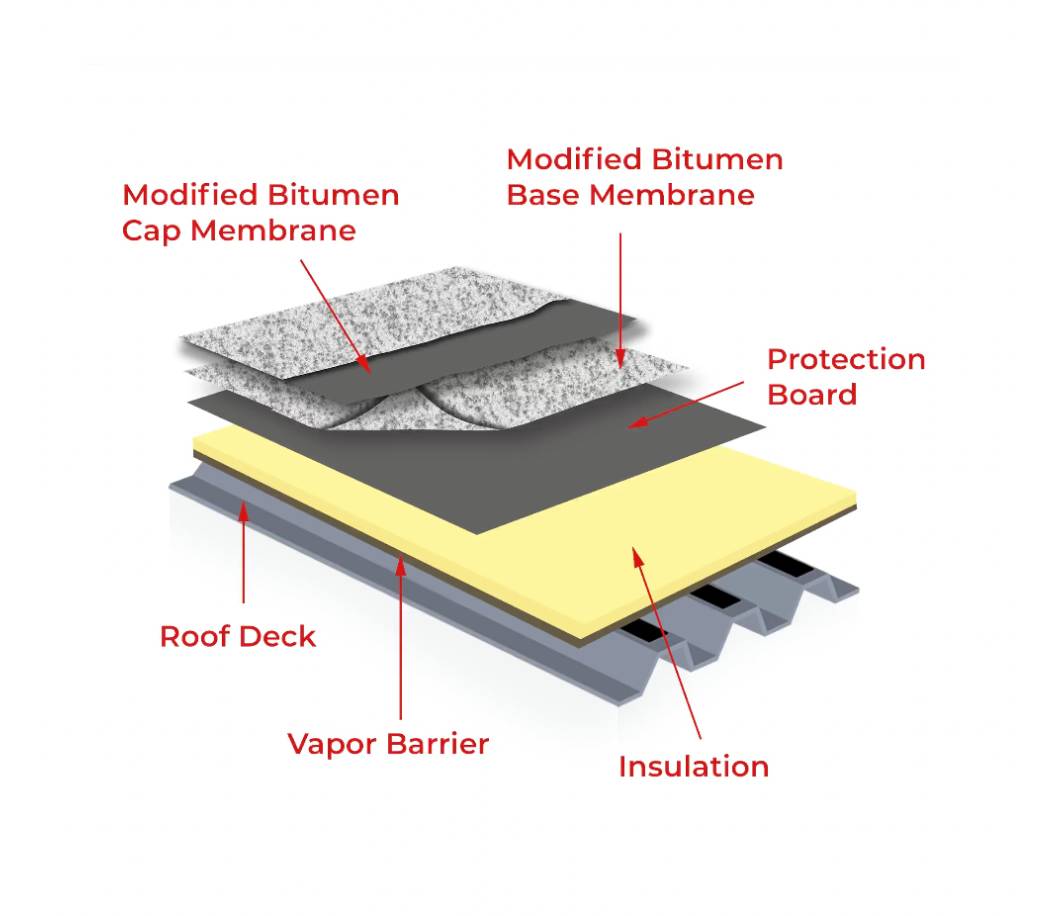
Modified bitumen and single-ply membranes are two popular choices for commercial flat roofs due to their durability and cost-effectiveness.
Modified bitumen is a type of asphalt-based roofing material that is reinforced with fiberglass or polyester fibers. It typically consists of multiple layers, including a base sheet, a ply sheet, and a cap sheet. The layers are heat-welded together to create a seamless membrane that provides excellent waterproofing properties.
Single-ply membranes are synthetic materials that come in two main types: thermoplastic and thermoset. Thermoplastic membranes, such as PVC and TPO, can be heat-welded or mechanically attached to the roof substrate. Thermoset membranes, like EPDM, are installed using adhesives. Single-ply membranes are lightweight, flexible, and resistant to UV radiation.
The installation process for modified bitumen involves heating the material with a torch or hot asphalt and then rolling it out onto the roof surface. This process requires specialized equipment and skilled labor. On the other hand, single-ply membranes can be installed using various methods, including fully adhered, mechanically attached, or ballasted.
The installation of single-ply membranes is typically faster and less labor-intensive compared to modified bitumen.
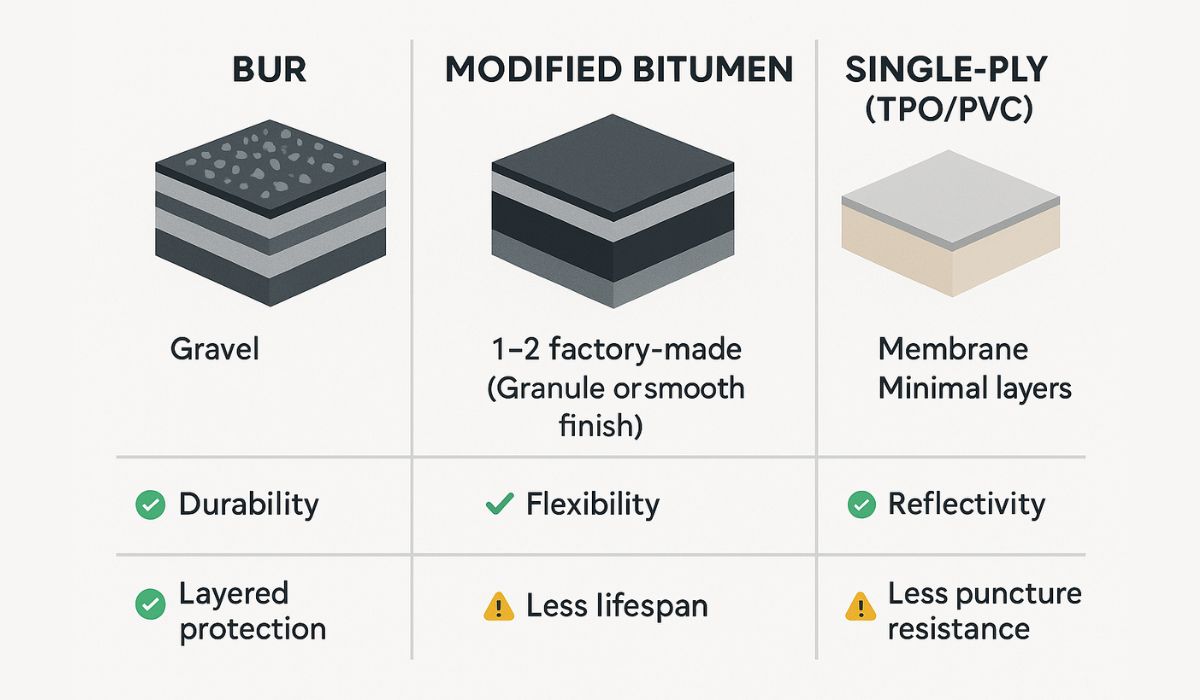
Modified bitumen is known for its exceptional durability when it comes to commercial flat roofs. This type of roofing material is constructed with multiple layers of asphalt and reinforcement materials, making it highly resistant to damage from UV rays, extreme temperatures, and impact.
Modified bitumen roofs have a lifespan of around 20 years on average, but with proper maintenance, they can last even longer. The multiple layers and composition of the material provide excellent protection against weather elements and wear and tear, ensuring a sturdy and long-lasting roof for commercial buildings.
Single-ply membranes, on the other hand, offer good longevity and can last anywhere from 15 to 30 years, depending on the type of membrane and the climate conditions they are exposed to. PVC and TPO membranes are known for their durability and resistance to weathering, making them popular choices for commercial flat roofs.
In terms of maintenance, modified bitumen roofs generally require more attention compared to single-ply membranes. Regular inspections, repairs, and recoating may be needed to ensure the longevity of a modified bitumen roof. On the other hand, single-ply membranes are relatively low maintenance, requiring occasional cleaning and inspections to spot any potential issues early on.
The cost of installing a roofing system is a crucial factor to consider for commercial property owners. When comparing modified bitumen with single-ply membranes, both initial installation costs and long-term cost implications play a significant role in decision-making.
When it comes to the initial installation costs, modified bitumen roofing systems tend to be more affordable compared to single-ply membranes. Modified bitumen roofs are typically easier and quicker to install, which can result in lower labor costs. Additionally, the materials used in modified bitumen roofing are generally less expensive than those used in single-ply membranes.
While modified bitumen roofs may have a lower initial cost, it is essential to consider the long-term cost implications of each roofing system. Single-ply membranes are known for their durability and longevity, requiring minimal maintenance over the years. On the other hand, modified bitumen roofs may need more frequent repairs and maintenance, which can add up in terms of costs over time.
Therefore, although single-ply membranes may have a higher upfront cost, they can be more cost-effective in the long run due to their extended lifespan and lower maintenance requirements.
Several factors can influence the overall cost-effectiveness of modified bitumen versus single-ply membranes. Factors such as the size of the roof, the location of the building, and the specific needs of the property can impact the total cost of the roofing system.
Additionally, considering the climate and weather conditions in the area can help determine which roofing system would be more cost-effective in the long term. Property owners should weigh these factors carefully to make an informed decision based on both initial costs and long-term savings.
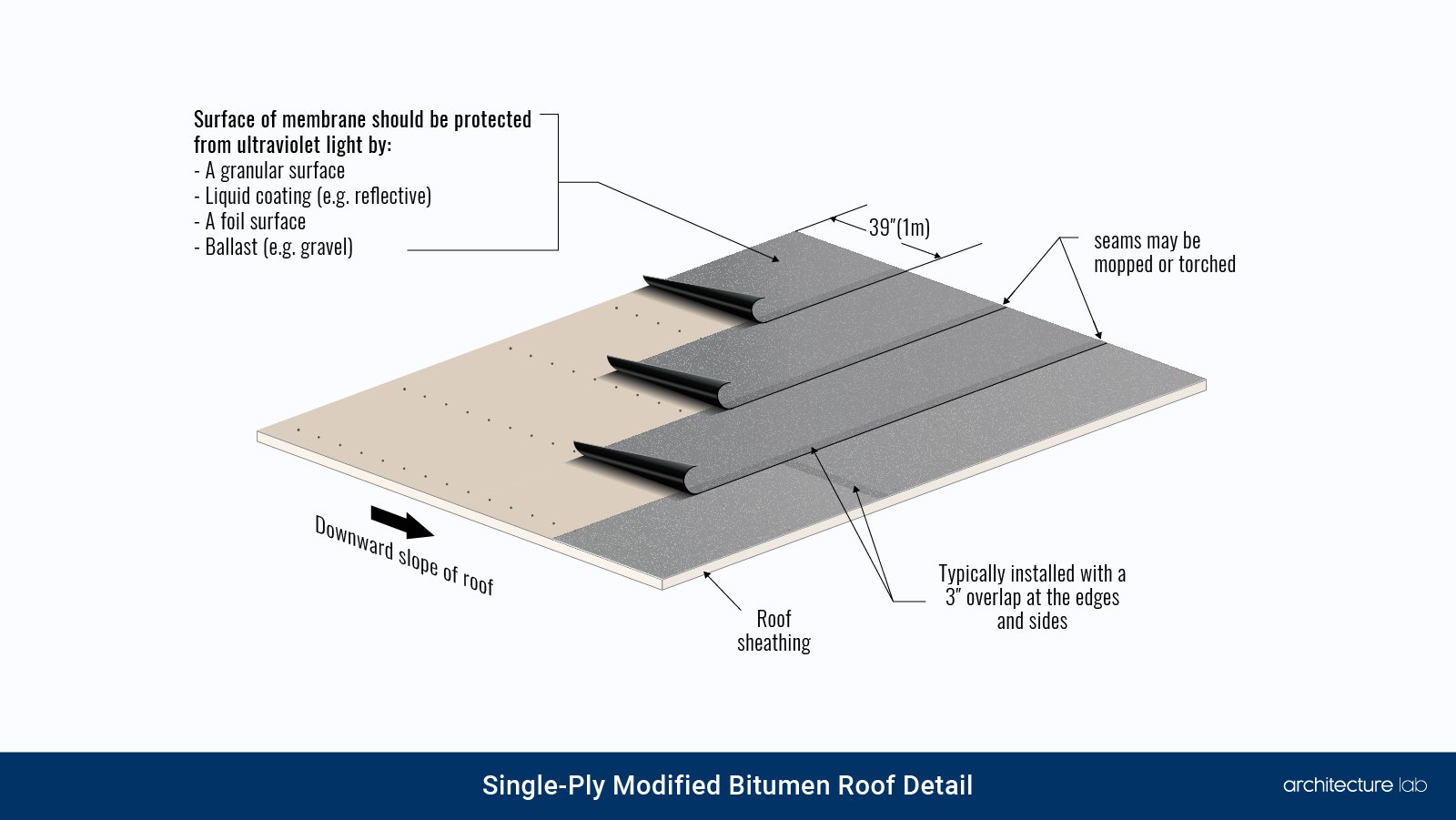
When it comes to energy efficiency and insulation in commercial flat roofs, the choice between modified bitumen and single-ply membranes can have a significant impact on a building’s overall energy consumption and sustainability.
Modified bitumen roofing systems are known for their excellent energy efficiency properties. The material’s dark surface helps absorb heat from the sun, reducing the amount of energy needed to cool the building’s interior. Additionally, some modified bitumen membranes come with reflective coatings that further enhance their energy-saving capabilities by reducing heat transfer into the building.
Single-ply membranes, on the other hand, are recognized for their insulation properties. These membranes can help regulate indoor temperatures by providing a barrier against heat loss in colder months and heat gain in warmer months. By minimizing temperature fluctuations, single-ply membranes can reduce the building’s reliance on heating and cooling systems, leading to lower energy consumption and costs.
In terms of environmental sustainability, both modified bitumen and single-ply membranes have their advantages. Modified bitumen is often made with recyclable materials and can be recycled at the end of its lifespan, making it a more environmentally friendly option. On the other hand, single-ply membranes are lightweight and can be easily installed without the need for heavy machinery, reducing carbon emissions during the installation process.Overall, both roofing systems offer energy efficiency benefits and insulation properties that can contribute to a building’s overall sustainability.
The choice between modified bitumen and single-ply membranes will depend on factors such as climate, budget, and specific energy-saving goals.
Are single-ply membranes easier to install compared to modified bitumen?
Yes, single-ply membranes are typically easier and quicker to install than modified bitumen.
Which roofing system is more cost-effective in the long run?
In the long run, single-ply membranes may have lower maintenance costs compared to modified bitumen.
Do single-ply membranes offer better insulation properties than modified bitumen?
Single-ply membranes are known for their excellent insulation properties, which can help reduce energy consumption.